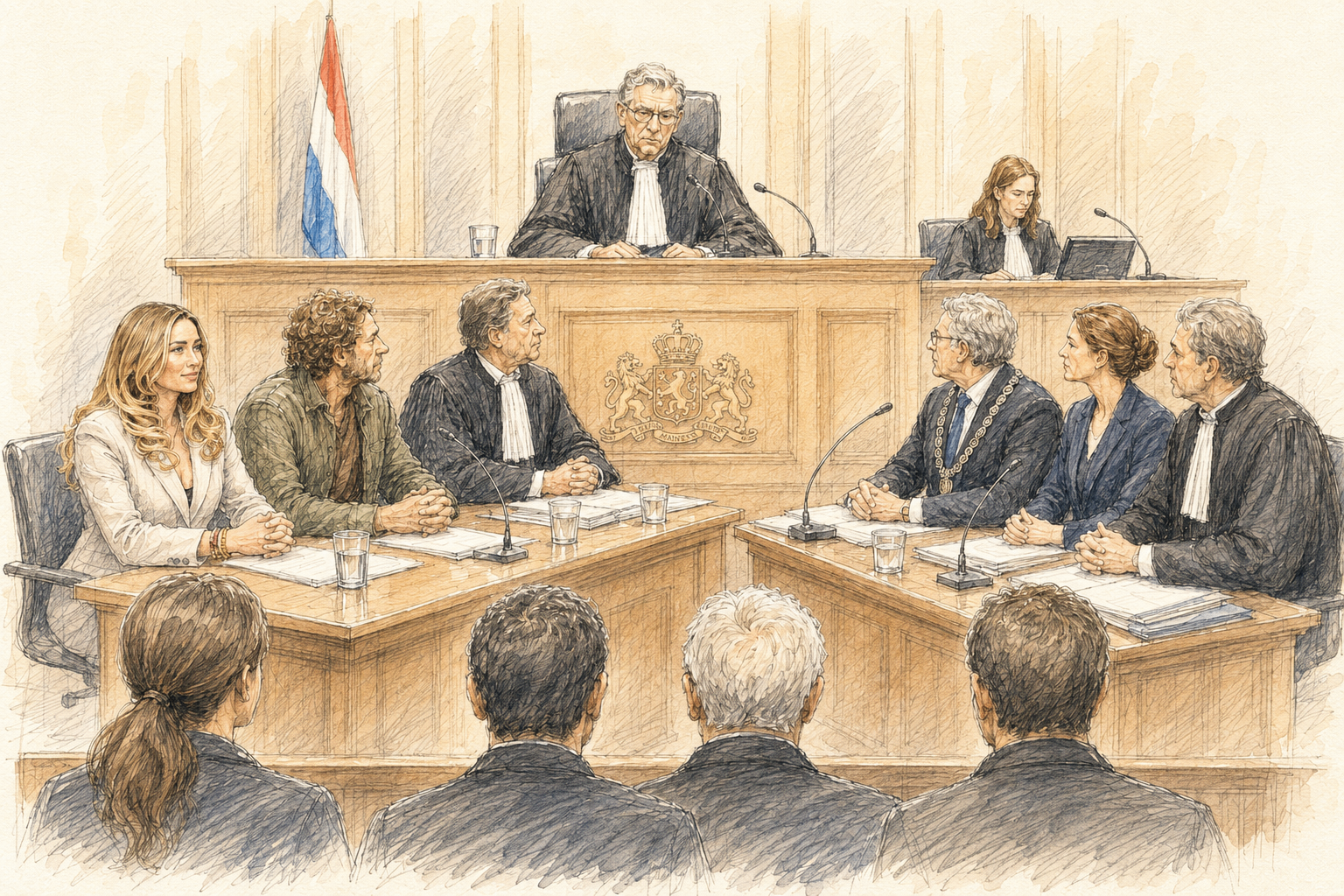
A mayor is more than just an implementer of rules. When entrepreneurs, employees, and families are negatively affected by policy, the office calls for diligence, proportionality, and the human touch – not a standard reference to objections and appeals.
Every mayor takes an oath or makes a promise upon assuming office. This includes:
I swear (promise) that I will be loyal to the Grondwet (Constitution), that I will obey the laws, and that I will fulfill my duties as mayor to the best of my knowledge and conscience.
These words are not merely ceremonial. They touch upon the core of the office. A mayor is not just an implementer of rules and a guardian of policy, but also bears responsibility for diligence, proportionality, and the human touch. Especially when municipal policy has major consequences for existing entrepreneurs, employees, and families, it should be expected that a mayor does not only formally look at procedures, but also administratively at what is reasonable, proportionate, and responsible.
In an increasing number of municipalities, however, a worrying pattern is emerging. When an existing coffeeshop entrepreneur faces difficulties due to illness, death, business succession, or changing municipal policy, an open administrative discussion about what is possible does not first take place. It is not first considered where there is room in the policy, whether custom solutions are possible, or whether the consequences are still proportionate to the objective.
Instead, the same formal response often follows: submit an application, await the decision, and then, if necessary, lodge an objection or appeal.
This is precisely where the problem lies.
The coffeeshop sector actively seeks contact with municipalities upfront. Not to provoke a conflict, but to prevent one. Attention is drawn to potential policy bottlenecks, room for custom solutions, unintended consequences, and situations where an existing business has operated within municipal frameworks for years. These are not legal tricks. These are signals that require administrative attention.
The goal is not to pressure municipalities. The goal is to enter into dialogue about solutions before positions become entrenched. About proportionality. About transitional law. About continuity. About conditions under which an existing situation can be responsibly continued. About whether the application of policy in a specific case still turns out to be reasonable.
When the primary response to this is a reference to objections and appeals, the problem is not solved. It is merely postponed.
It is not without reason that a mayor is popularly referred to as a ‘burgervader’ (civic father) or ‘burgermoeder’ (civic mother). This term is not a formal legal title, but it does say something about the moral expectation associated with the office. A mayor stands above parties, is visible in the community, and is expected to consider what decisions mean for residents, entrepreneurs, and families. Not just on paper, but in practice.
This role requires more than just guarding policy rules. It also demands proximity, willingness to listen, and administrative courage. A ‘burgervader’ does not too quickly say: you can object. A ‘burgervader’ first asks: what is actually happening here, who is affected by this, and is this still reasonable?
This does not mean that every entrepreneur automatically gets their way. Nor does it mean that policy should simply be set aside. But it does mean that a municipality should seriously investigate whether there is room within the existing framework for custom solutions, temporary continuation, transitional law, additional conditions, or another solution that does justice to all interests.
Objections and appeals are important legal remedies. No one disputes that. But they are intended as ex-post corrections, not as a substitute for diligent ex-ante administration. A municipality should look at the concrete facts and interests before taking a far-reaching decision. What does the termination or loss of an existing operational position mean for the entrepreneur? For their family? For employees? For customers? For local public order? And can the objective that the municipality pursues be achieved in a less drastic way?
These questions should not only come up before the bezwaarschriftencommissie (objections committee) or the court. By then, relationships have often already hardened, uncertainty has increased, and damage may already have been done.
This is all the more problematic with coffeeshops. Coffeeshops operate within an exceptional tolerance system established by the government itself. They are not regular businesses, but neither are they abstract policy objects. They are existing businesses that often operate under municipal supervision for years. They have staff, rental obligations, customers, local recognition, and a role in managing a market that does not disappear when a coffeeshop closes, but merely shifts.
Precisely for this reason, diligent administration is especially important here. A personal tolerance status, a maximum system, or a distance criterion can have major consequences. Such policy instruments should not be used as an automatic finish line without visibly weighing what their application means in a specific case. A policy rule is not an excuse to stop thinking. A maximum system does not relieve a municipality of the duty to assess whether its application in an individual situation is necessary, proportionate, and reasonable.
Nevertheless, in several municipalities, the reflex seems to be to apply policy as strictly as possible and then to lay the consequences at the entrepreneur's feet. Those affected can litigate. In doing so, the human touch turns into a legal obstacle course.
That is administratively inadequate.
This is not about whether every existing coffeeshop should always be allowed to continue to exist. It is about a municipality visibly and seriously weighing what is truly at stake. If a business has operated within municipal frameworks for years, without notable problems, then that situation deserves more than a standard reference to policy and legal remedies.
Governing is more than applying rules. Governing is also taking responsibility for the consequences of those rules.
Whoever, as mayor, promises to obey the laws and fulfill the duties of the office to the best of their knowledge and conscience, thereby also promises something about the attitude with which decisions are made. Not aloof, not purely procedural, but diligently and with an eye for the people affected by policy.
A reference to objections and appeals may be legally correct. But if that reference takes the place of a serious discussion about custom solutions, proportionality, and continuity, then the administration falls short.
It should not be about whether municipalities can be legally right. But about what is right.
It is a pity that the human touch seems to recede into the background in such situations. Precisely when entrepreneurs, employees, and families timely draw attention to the consequences of policy, the conversation should be central. Not the procedure. Not the legal route. But the question of what is diligent, reasonable, and human in this concrete situation. Precisely that caring and connecting quality is what you can expect from a mayor; from someone who is, not for nothing, also called a ‘burgervader’ or ‘burgermoeder’.
— Simone van Breda, 21 May 2026
Preferred source
Follow Simone van Breda on Google
Choose Simone van Breda as a preferred source and see my news and analyses more often in relevant searches.